"**Electro Chromic Technology for Smart Windows Market Size And Forecast by 2028**
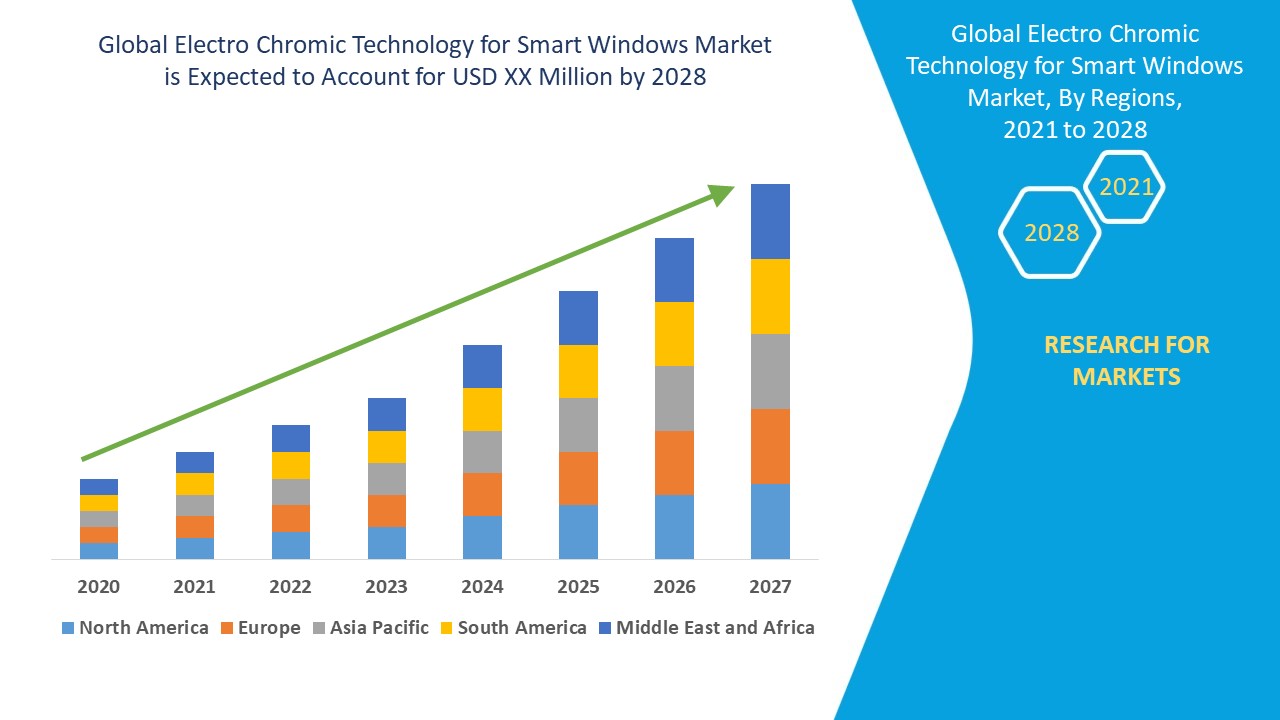
Electro chromic technology for smart windows market is expected to witness market growth at a rate of 17.10% in the forecast period of 2021 to 2028. Data Bridge Market Research report on electro chromic technology for smart windows market provides analysis and insights regarding the various factors expected to be prevalent throughout the forecast period while providing their impacts on the market’s growth.
The Electro Chromic Technology for Smart Windows Market is a dynamic and rapidly evolving industry, encompassing a wide range of applications and opportunities. With significant advancements in technology, shifting consumer preferences, and increasing demand for innovative solutions, the market has grown to become a vital sector in the global economy. This report provides a comprehensive analysis of the Electro Chromic Technology for Smart Windows Market, covering its size, share, scope, and the key factors influencing its development.
Get a Sample PDF of Report - https://www.databridgemarketresearch.com/request-a-sample/?dbmr=global-electro-chromic-technology-for-smart-windows-market
Which are the top companies operating in the Electro Chromic Technology for Smart Windows Market?
The Top 10 Companies in Electro Chromic Technology for Smart Windows Market include well-established players. These companies are known for their market expertise, strong product portfolios, and significant market share. Their innovation, customer focus, and global operations have helped them maintain leadership positions in the market, offering high-quality solutions and services that meet the evolving needs of consumers.
Segments
The electrochromic technology for smart windows market is segmented by material type, application, and region. In terms of material type, the market is categorized into electrochromic polymers, nanocrystal films, reflective hydrides, VIOx films, conductive polymers, and other materials. These materials offer varying levels of performance and durability, catering to different needs of end-users. In terms of application, the market is segmented into automotive, aerospace, defense, residential buildings, commercial buildings, and other applications. Each application segment has unique requirements for smart windows, driving the demand for specific material types. Geographically, the market is segmented into North America, Europe, Asia-Pacific, South America, and the Middle East and Africa, each region presenting its own opportunities and challenges for market growth.