"**Telehealth Software Market Size And Forecast by 2029**
The Telehealth Software Market is a rapidly expanding industry that plays a critical role in shaping global economic dynamics. With its remarkable size, share, and scope, the market has become a focal point for innovation, investment, and growth. This comprehensive research report delves into the market's evolution, offering insights into its current performance and future outlook. It examines key factors such as demand, growth drivers, and revenue trends that are shaping the industry's trajectory.
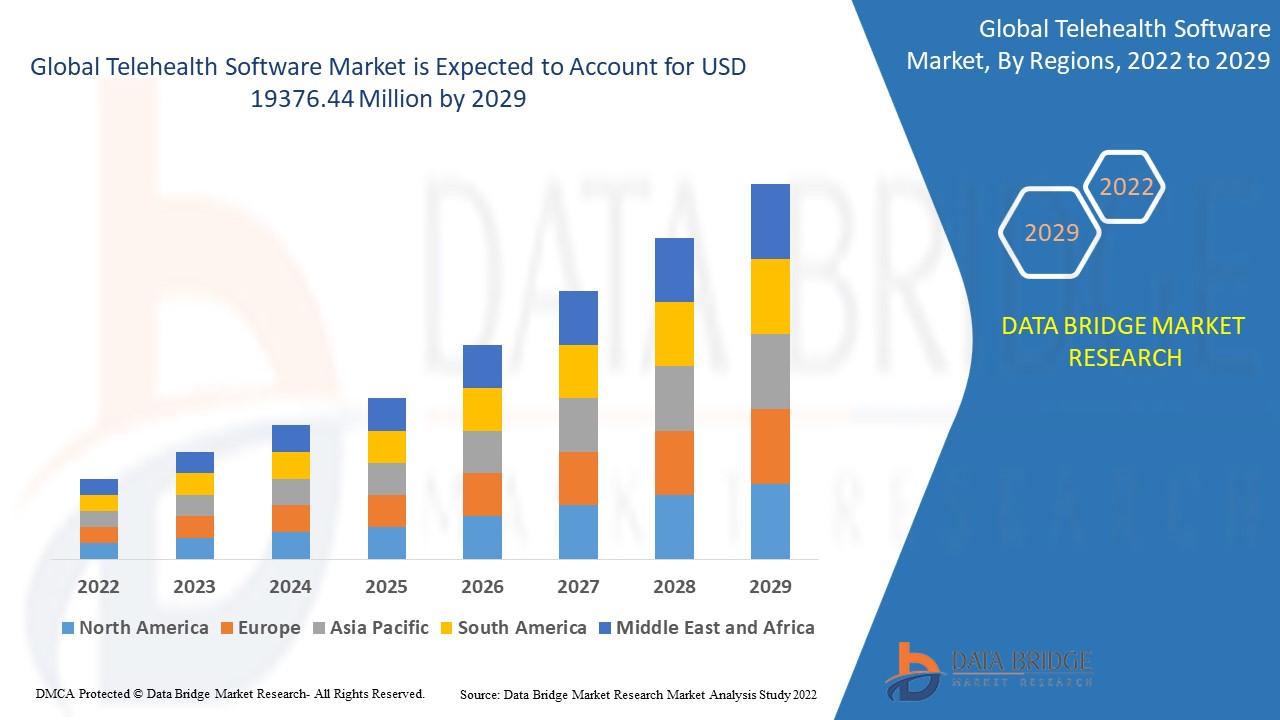
Data Bridge Market Research analyses that the Global Telehealth Software Market which was USD 6290.3 Billion in 2021 is expected to reach USD 19376.44 Million by 2029 and is expected to undergo a CAGR of 15.10% during the forecast period of 2021 to 2029
Get a Sample PDF of Report - https://www.databridgemarketresearch.com/request-a-sample/?dbmr=global-telehealth-software-market
Which are the top companies operating in the Telehealth Software Market?
The Top 10 Companies in Telehealth Software Market are prominent players known for their leadership and innovation. These include companies recognized for their strong product offerings and market influence. These companies have built solid reputations through their commitment to quality, customer satisfaction, and staying ahead of industry trends, making them key competitors in the Telehealth Software Market.
Segments
The global telehealth software market is poised for significant growth, driven by factors such as increasing demand for remote healthcare services, technological advancements in telecommunication, and rising adoption of telehealth solutions by healthcare providers and patients alike. For more detailed insights and market trends, refer to https://www.databridgemarketresearch.com/reports/global-telehealth-software-market One key trend influencing the telehealth software market is the shift towards value-based care and population health management. Healthcare providers are increasingly focused on improving patient outcomes and reducing healthcare costs, driving the adoption of telehealth solutions that enable more efficient and effective care delivery. Telehealth software allows for remote monitoring of patients with chronic conditions, early intervention in high-risk populations, and continuous engagement with patients to promote adherence to treatment plans. By leveraging telehealth technologies, healthcare organizations can enhance care coordination, prevent unnecessary hospital readmissions, and ultimately improve the overall quality of care delivered to patients.
Another significant factor driving the growth of the telehealth software market is the increasing prevalence of chronic diseases and the aging population. Chronic diseases such as diabetes, hypertension, and cardiovascular conditions require ongoing management and monitoring, which can be challenging for patients to access traditional healthcare services frequently. Telehealth software enables remote monitoring of vital signs, medication adherence, and lifestyle changes, providing patients with greater convenience and support in managing their chronic conditions. Additionally, telehealth solutions facilitate virtual consultations with specialists, reducing the need for patients to travel long distances for appointments and improving access to specialized care.
Furthermore, the COVID-19 pandemic has accelerated the adoption of telehealth software worldwide. The need for social distancing and the strain on healthcare resources during the pandemic prompted a rapid shift towards telehealth services to ensure continuity of care for patients while minimizing the risk of exposure to the virus. Healthcare providers quickly implemented telehealth solutions to offer virtual consultations, triage patients remotely, and monitor COVID-19 symptoms for both infected individuals and high-risk populations. As a result, telehealth software became an essential tool in the healthcare industry, driving increased awareness and acceptance of virtual care delivery among providers, patients, and payers.